
‘New and pragmatic’ approach to help Wales become TB free
Dull 'newydd a phragmatig' i helpu Cymru i fod heb TB
- The Welsh Government will take a new and pragmatic approach to TB eradication that is evidence-based and science-led, incorporating the three pillars of cattle, people and wildlife, which reflects our Programme for Government commitment.
- Nearly 96% of herds in Wales are now TB free, but on the current trajectory, Wales is unlikely to achieve Officially TB Free status by 2041. Partnership working and sustained effort and action by all needed, towards the common goal of a TB-free Wales.
The Welsh Government is today publishing advice from the Bovine TB Eradication Programme Board and the Technical Advisory Group, alongside its response, as Wales moves to a step change in tackling the disease.
The Cabinet Minister for Rural Resilience and Sustainability has today confirmed that the Welsh Government will start to act on the Board's advice now, while carrying out further work in parallel.
The Minister also confirmed a mass, non-selective, cull of badgers is not being pursued.
The TB Eradication Programme Board’s advice includes priorities that will be taken forward and developed, starting immediately, across the three pillars of cattle, people and wildlife.
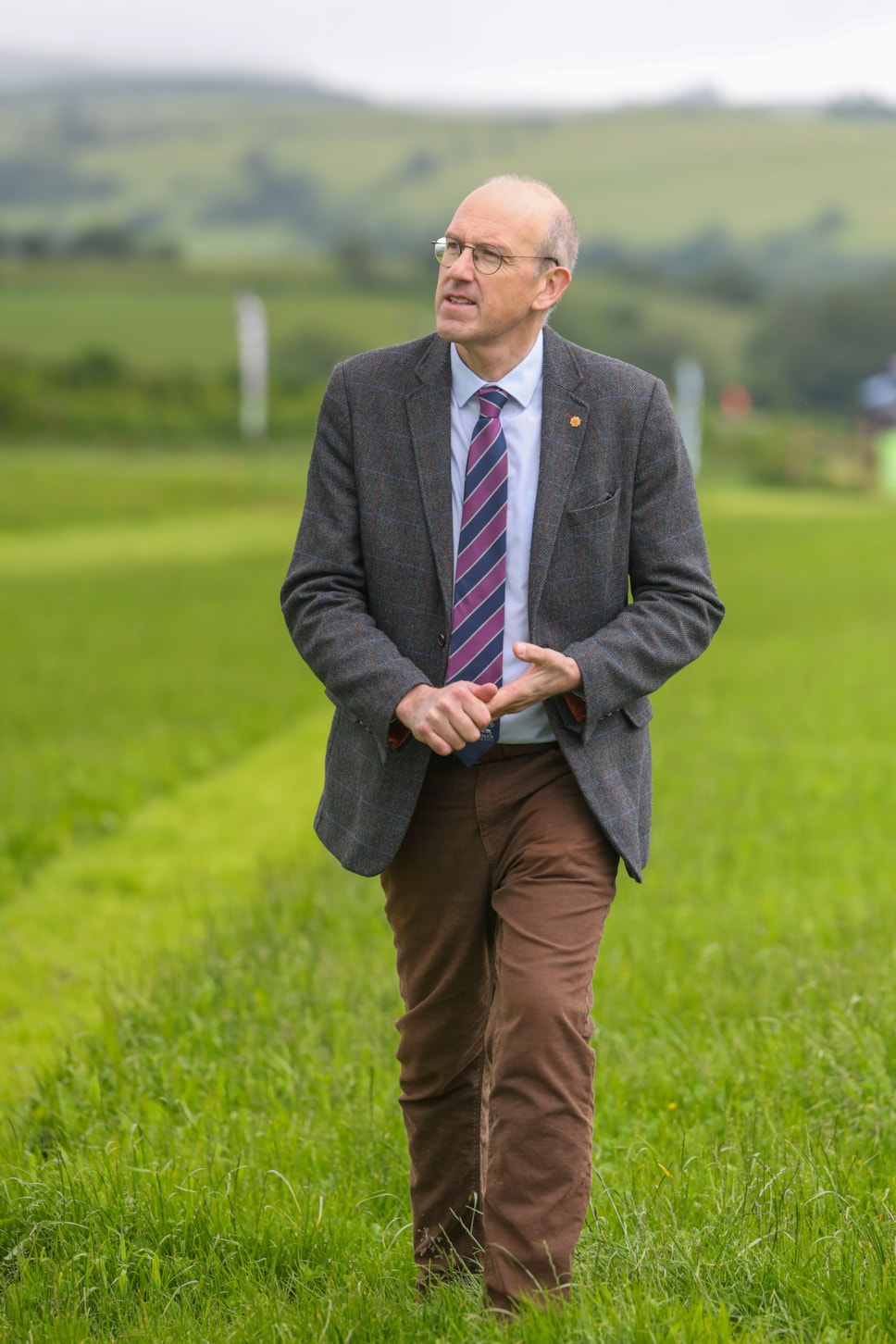
Cabinet Minister for Rural Resilience and Sustainability, Llyr Gruffydd, said:
“Bovine TB remains one of the most serious animal health challenges facing Wales. For farming families, a TB breakdown can mean months or years of restrictions, uncertainty and difficult choices.
“Nearly 96% of herds in Wales are now TB free. However, on current progress, Wales is unlikely to be Officially TB Free by 2041.
“The status quo is not an option.
“That’s why we are taking a new and pragmatic approach to eradicating bovine TB. We will not stand by while farmers face uncertainty and anxiety, nor will we pursue a mass non-selective cull.
"Instead, we will be taking evidence-based and science-led action, incorporating the three pillars of cattle, people and wildlife. Where there is evidence of infection threatening farmers’ herds and consequently their livelihoods, we will intervene.
“Farmers and the public will rightly judge us on whether we prevent disease, and reduce its impact, even when the decisions are difficult. Progress will depend on partnership and sustained effort and action by all, towards the common goal we all share of a TB-free Wales.”
Notes to editors
The three pillars of cattle, people and wildlife:
Cattle
An approach will be developed so that farmers with persistent TB breakdowns, and their vets, will be able to choose an approach that tailors biosecurity and managing out high-risk cattle, learning lessons from trial projects in Pembrokeshire, North Wales and Nant y Garth. Reducing the length of time herds stay under restriction is a priority. It will also ease the strain on farming families' wellbeing.
The Welsh Government will also bring forward options for diagnostic testing to spot infection earlier, while keeping statutory skin testing. It will also explore safe ways to move cattle out of TB restricted herds.
As part of this, farmers and vets will get better information on the TB status and disease risk of cattle, including those they plan to buy.
People
Approaches for farmers and vets to receive proactive support will be developed, rather than only after a TB breakdown has occurred.
Farmers, private vets, the Animal and Plant Health Agency (APHA) and Welsh Government will work more closely - using local knowledge to manage disease.
Wildlife
The Welsh Government is not pursuing a mass, non-selective, cull of badgers. But action will be taken on TB in wildlife.
Targeted, proportionate options - where evidence supports them – will be developed, guided by the principle that intervention should follow the disease. This may include testing, vaccination and removal or release where the evidence supports this.
New badger population surveys and fieldwork will add to the evidence. Work on the role of deer will do the same.
Next steps
Work will start to act on the Board's advice now, while carrying out further activities in parallel.
Research, surveillance, epidemiological analysis, field studies and modelling will inform further policy development, action and measures of success. Progress against the Board's advice will be reported next autumn.