
Changes to Bluetongue restrictions confirmed for Autumn sales & markets
Newidiadau i gyfyngiadau'r Tafod Glas wedi'u cadarnhau ar gyfer gwerthiannau a marchnadoedd yr hydref
Important changes to the Bluetongue restrictions currently in place in Wales will come into effect two weeks today.
The phased changes to facilitate Autumn sales of livestock will start on Monday, August 18.
From then, Welsh livestock that have completed a course of a Bluetongue virus serotype 3 (BTV-3) vaccination, will be able to attend English markets within 20km of the Welsh border.
Markets eligible to hold dedicated sales of vaccinated Welsh only livestock include Bishops Castle, Hereford, Kington, Ludlow, Market Drayton, Oswestry, Ross-on-Wye and Shrewsbury, and must adhere to specific conditions.
Animals attending these markets and returning to Wales must also complete the movement within the same day and are subject to the conditions of a general licence.
Animals cannot remain at the market overnight and these animals will not be subject to any pre- or post-movement testing requirements where all conditions have been met.
Chief Veterinary Officer for Wales, Richard Irvine said: “Bluetongue is a potentially devastating disease, as has unfortunately been seen in other countries.
“As part of keeping our commitment to review of our Bluetongue policy, we have held regular stakeholder discussions.
“From these, a phased approach to facilitate Autumn sales has been agreed that balances industry needs against the risk of disease incursion.
“It is important that we all recognise the implicit, and cumulative risk in progressively removing livestock restrictions, and the balance that must be struck between the ability to trade and the increased risk of disease incursion.
“Through discussions the industry also fully recognises their responsibilities, including the need to ensure compliance with the requirements to attend sales and markets, the fundamental role of Bluetongue vaccination – and the shared risk and consequences should Bluetongue enter Wales.”
“With the Autumn sales approaching, we are considering further adjustments to our policy, including facilitating breeding sales at ‘Bluetongue Approved Green Markets’ located in Wales for the sale of BTV-3 vaccinated livestock from England and Wales.
“These sales will be able to apply to become ‘Bluetongue Approved Green Markets’ from mid-September.”
Notes to editors
- Vaccination remains the best method of protecting livestock and reducing the potentially devastating impacts of Bluetongue.
- The Welsh Government fully supports the “Don’t wait, vaccinate” campaign and encourages all farmers to discuss their BTV-3 vaccination options with their private vet.
- Information about Bluetongue vaccines and decision-support tools for farmers and vets regarding BTV-3 vaccination are freely available online at: Battle Bluetongue campaign - Ruminant Health & Welfare
- The Welsh Government continues to work closely with Defra, the Scottish Government, APHA, the Pirbright Institute, the Veterinary Medicines Directorate and partners from the industry and veterinary sectors to keep this policy area under review - based on the disease picture and emerging evidence going forward.
- This includes ongoing, close consideration of any developments around BTV-3 vaccine effectiveness, and changes to disease status within Wales.
- Industry engagement remains at the heart of Welsh Government policy making around Bluetongue, and we continue to listen carefully and work with our stakeholders and partners.
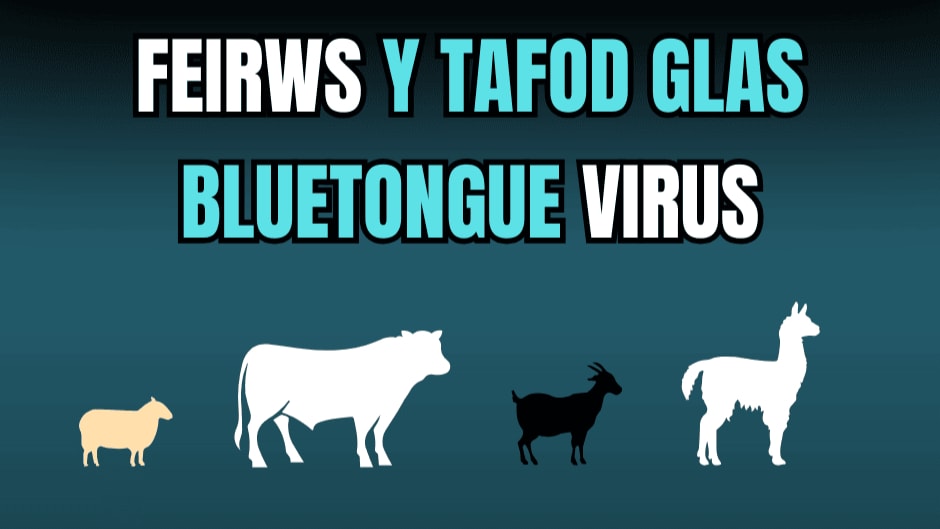
- Bluetongue does not affect people or food safety. The virus is primarily transmitted by midge bites and affects cattle, goats, sheep and camelids such as llamas, and midges are most active between April and November.
- Bluetongue is a notifiable disease. Livestock keepers are reminded to maintain vigilance for Bluetongue, and any suspect cases must be reported immediately to the Animal and Plant Health Agency (APHA).
- From 14th July livestock markets in Wales have been able to apply to become a ‘Bluetongue Approved Red Market’ for the sale of animals originating from the Restricted Zone in England, for onward movement direct to a designated slaughterhouse in Wales, or a slaughterhouse within the Restricted Zone.
- Since 20 June, the Welsh Government has allowed cattle fully vaccinated with Boehringer Ingelheim’s Bultavo-3 vaccine, to move under licence, from a Restricted Zone to Wales without a pre-movement test.
- We are also considering the issue of direct farm-to-farm moves for vaccinated stock. However, it is important to recognise any relaxation of restrictions generates a greater risk of disease incursion.